Back to All Halls

The Combustion Chronicles

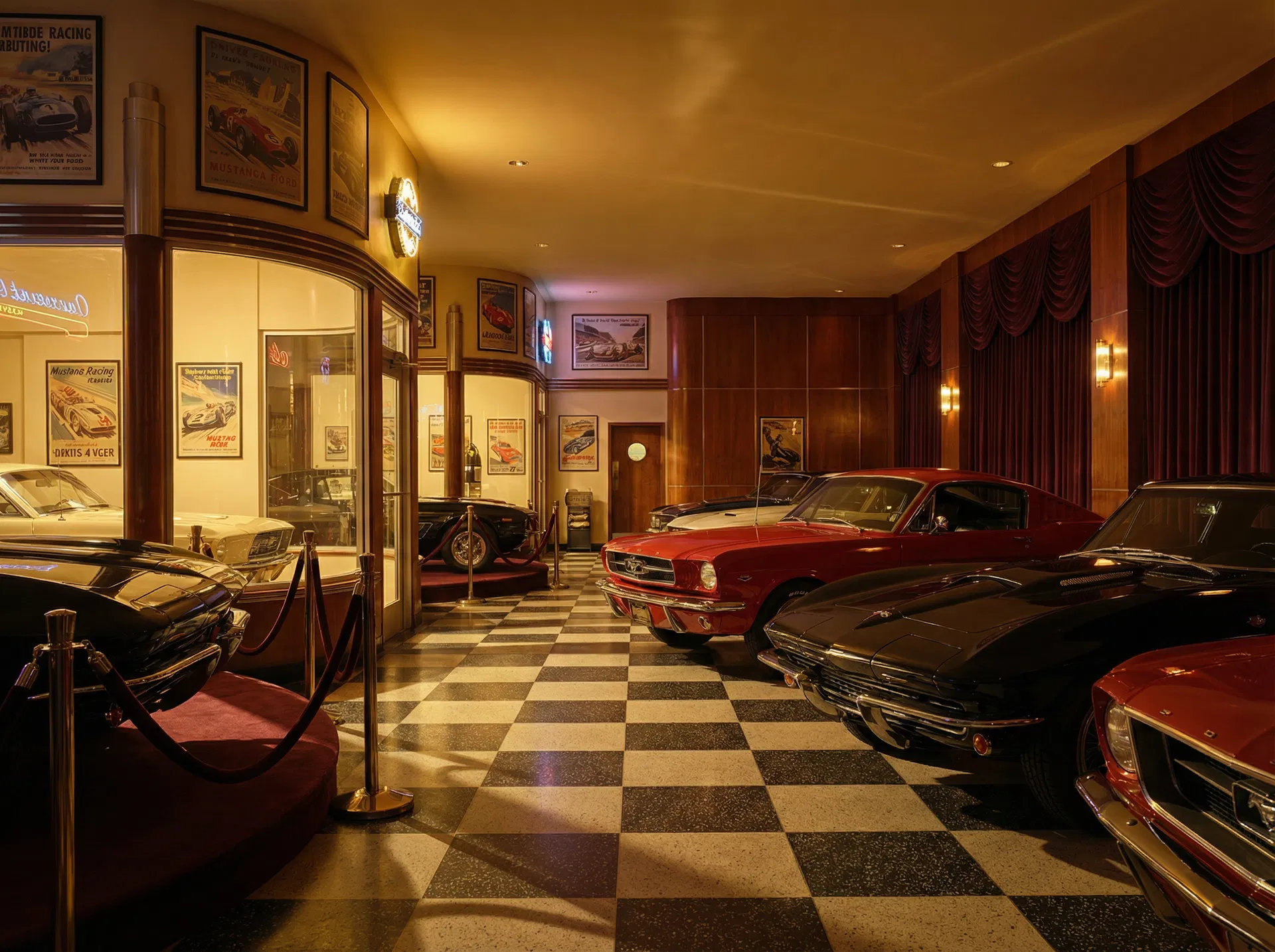
Classic automobiles, racing heritage, and the chrome-plated dreams of the open road. From Detroit muscle to European grand tourers.

The Time Traveller's Dossier : 1969 Camaro SS & The Centennial Queen - A Societal Intersection — The Record Institute Journal
44

Featured

The Time Traveller's Dossier : 1969 Camaro SS & The Centennial Queen - A Societal Intersection

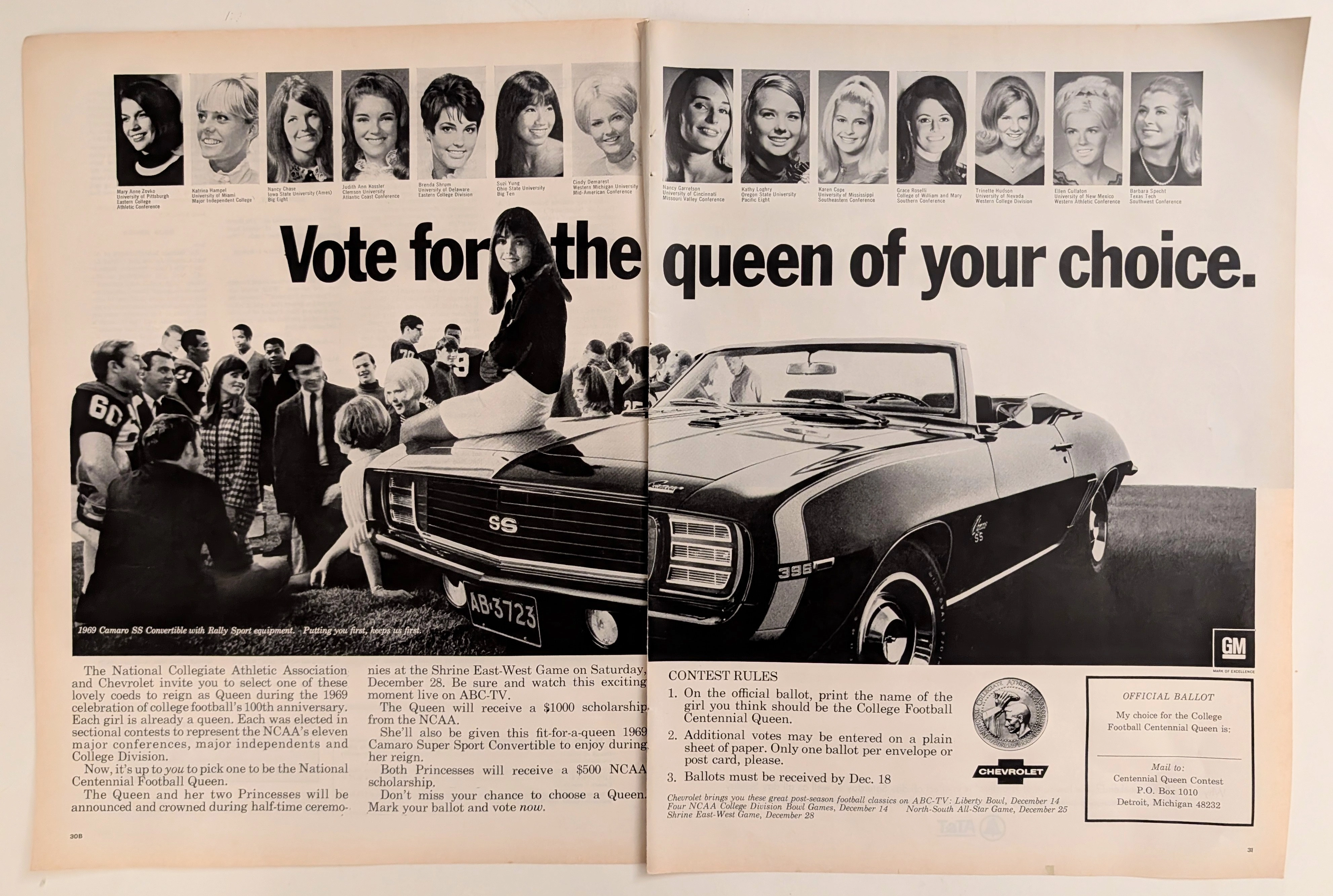
Before this artifact. The automobile was utility. The university was an academic sanctuary. Pageantry was isolated. Detroit sold machines; colleges sold degrees. Then, a shift. The 1969 College Football Centennial Queen Contest. A profound intersection of American cultural pillars: collegiate athletics, the burgeoning muscle car era, and the commodification of collegiate femininity. Chevrolet didn't just sponsor a football anniversary. They engineered a nationwide participatory spectacle, merging the raw, mechanical desire for the newly redesigned 1969 Camaro SS 396 with the sanitized, aspirational glamour of the "coed" Queen. It was the ultimate democratization of choice, packaged as a mail-in ballot. You were not just choosing a representative for a football game; you were participating in the coronation of the Chevrolet lifestyle.
Photography & FilmAutomotivePatina & Rarity
May 5, 2026Read
The Time Traveller's Dossier : 1980 IH Scout - The SUV Genesis — The Record Institute Journal
95
April 24, 2026

The Time Traveller's Dossier : 1980 IH Scout - The SUV Genesis

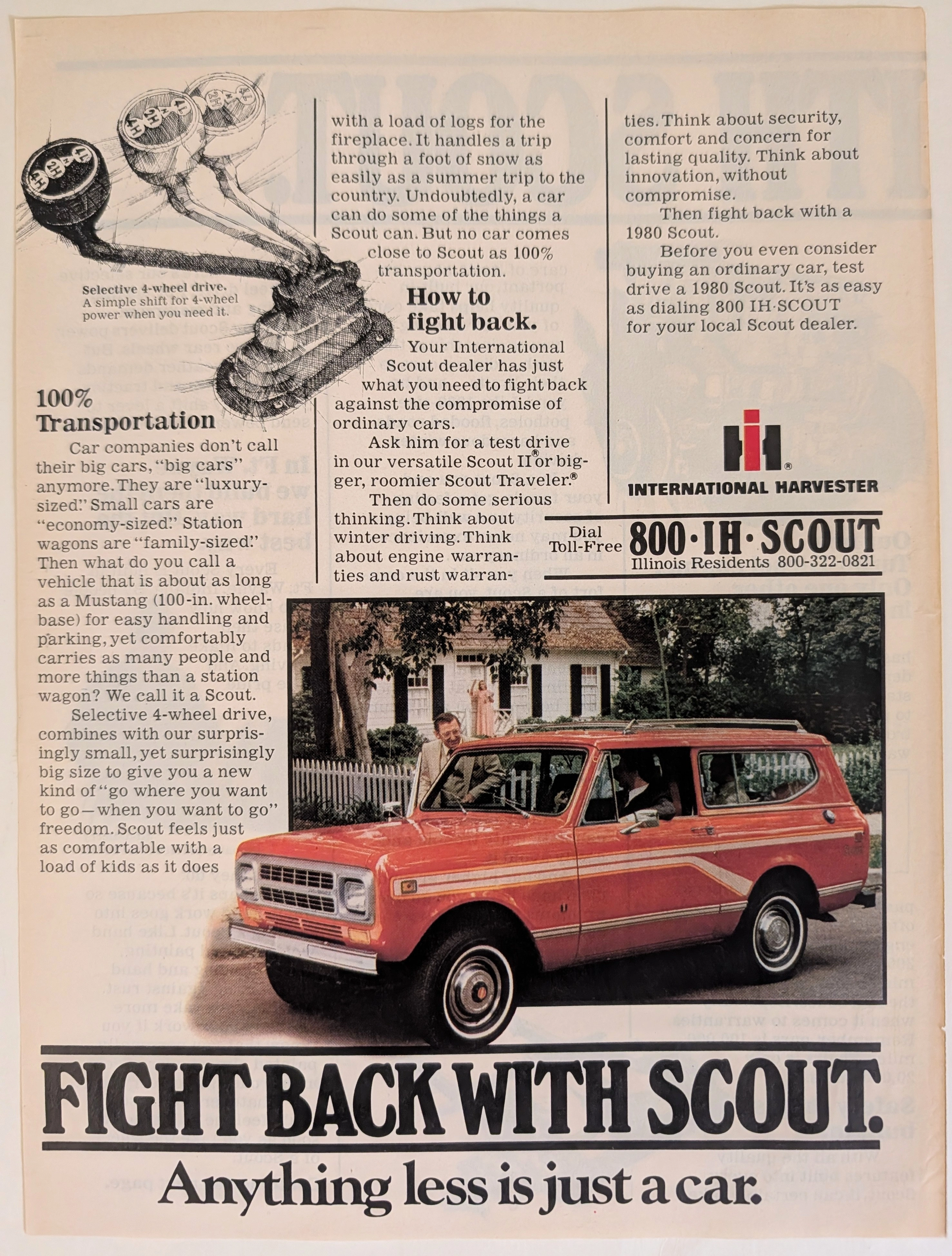
Classic SUV The year is 1980. The American automotive landscape is fracturing. Then, the highway was ruled by bloated steel monoliths. Land yachts built for endless, cheap fuel. Now, the market dictates severe compromise. The "economy-sized" concession born of geopolitical oil shocks. The International Harvester Scout refuses both paradigms. It offers a third trajectory. The concept of "100% Transportation." This artifact documents a pivotal pivot in mechanical history. It captures the precise moment the utilitarian agricultural workhorse mutated into the suburban family carriage. It is the dawn of the Sport Utility Vehicle, recorded in offset ink and degrading pulp. A mechanical declaration of independence against the ordinary passenger car. It is an invitation to reject the passive commute. To fight back. With selective four-wheel drive.

Automotive
Read More
The Time Traveller's Dossier: The Heart of the Yellow Teapot – Renault's 1.5L V6 Turbo — The Record Institute Journal
83
April 23, 2026

The Time Traveller's Dossier: The Heart of the Yellow Teapot – Renault's 1.5L V6 Turbo

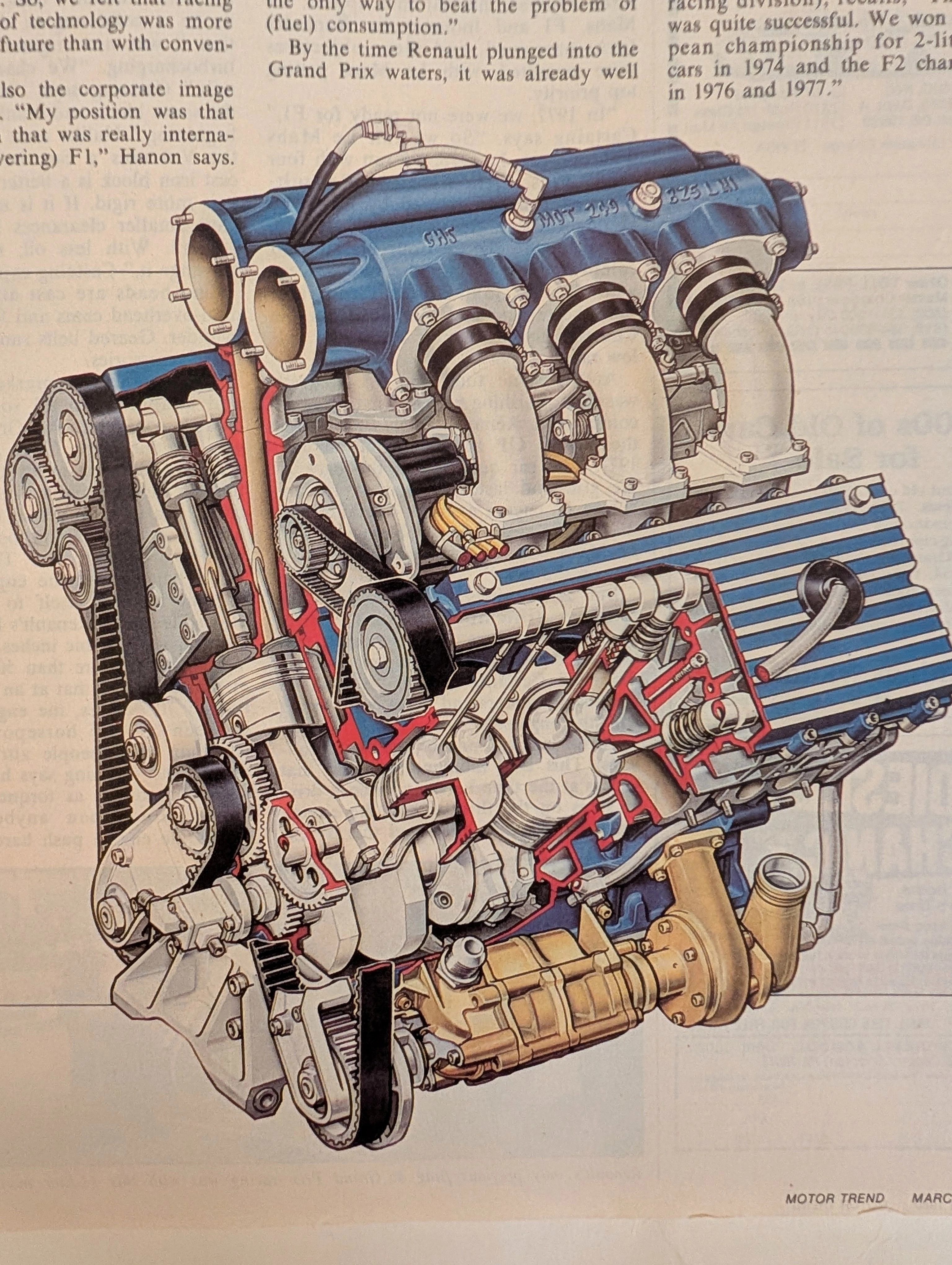
If the previous dossier showcased the aerodynamic envelope of the Renault F1 revolution, this artifact reveals its beating, volatile heart. Before us is page 113 of the March 1980 issue of Motor Trend magazine, featuring an article titled "Prix Car" by Fred M.H. Gregory. The visual anchor of the page is a stunning, full-color technical cutaway of the engine that triggered a seismic shift in motorsport: the Renault-Gordini EF1 1.5-liter turbocharged V6. This engine was the weapon that shattered the dominance of the naturally aspirated 3.0-liter engines. It is a masterpiece of complex plumbing, extreme thermal stress, and corporate ambition. The text surrounding the illustration provides the critical "why" behind the engineering—revealing that Renault's expensive F1 gamble was ultimately a high-speed marketing campaign to sell economical, turbocharged road cars to the everyday driver.

Art & IllustrationAutomotive
Read More
The Time Traveller's Dossier : Renault's Turbo Gamble - Anatomy of a Revolution — The Record Institute Journal
94
April 23, 2026

The Time Traveller's Dossier : Renault's Turbo Gamble - Anatomy of a Revolution

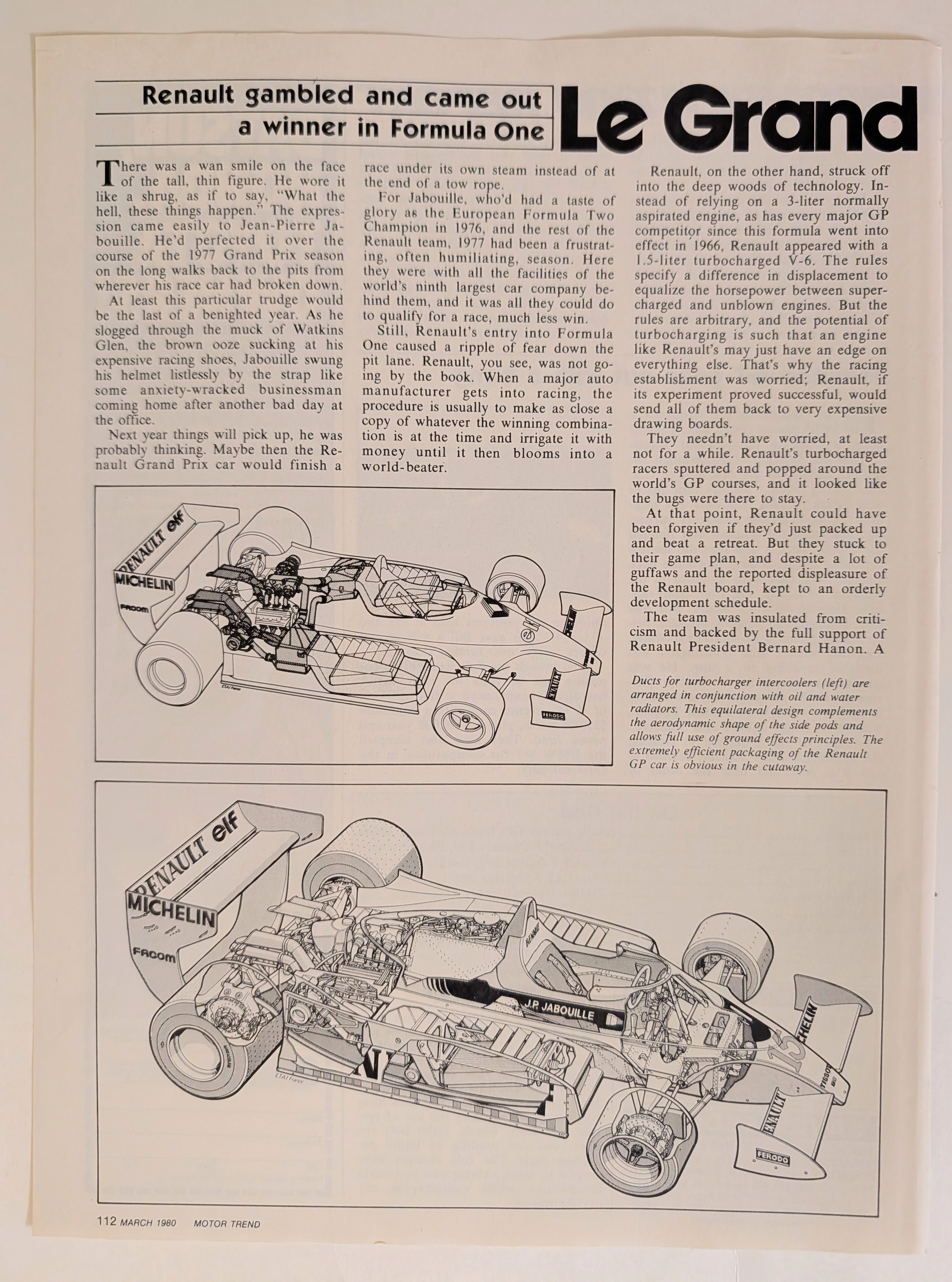
In the annals of motorsport, true revolutions are rarely born from immediate success. They are usually forged in the fires of public humiliation, mechanical failure, and stubborn, visionary persistence. Before the modern era of ultra-efficient hybrid power units, Formula One was dominated by a single, reliable philosophy: the 3.0-liter naturally aspirated engine (most notably the ubiquitous Ford Cosworth DFV). Then came Renault. In 1977, the French manufacturer did not enter F1 to conform; they entered to disrupt. They chose a loophole in the rulebook that allowed for 1.5-liter forced-induction engines—a path so complex and fraught with reliability issues that the established British teams dismissed it entirely. The artifact before us—a page from the March 1980 issue of Motor Trend magazine—captures the precise historical moment when the laughter stopped. It documents the vindication of the turbocharged V6. This magnificent technical cutaway illustrates not just a car, but the blueprint of a paradigm shift that would permanently alter the trajectory of global motorsport.

Photography & FilmAutomotive
Read More
The Time Traveller's Dossier: BBS Wheels 1986 - The Golden Age of IMSA GTP — The Record Institute Journal
102
April 21, 2026

The Time Traveller's Dossier: BBS Wheels 1986 - The Golden Age of IMSA GTP

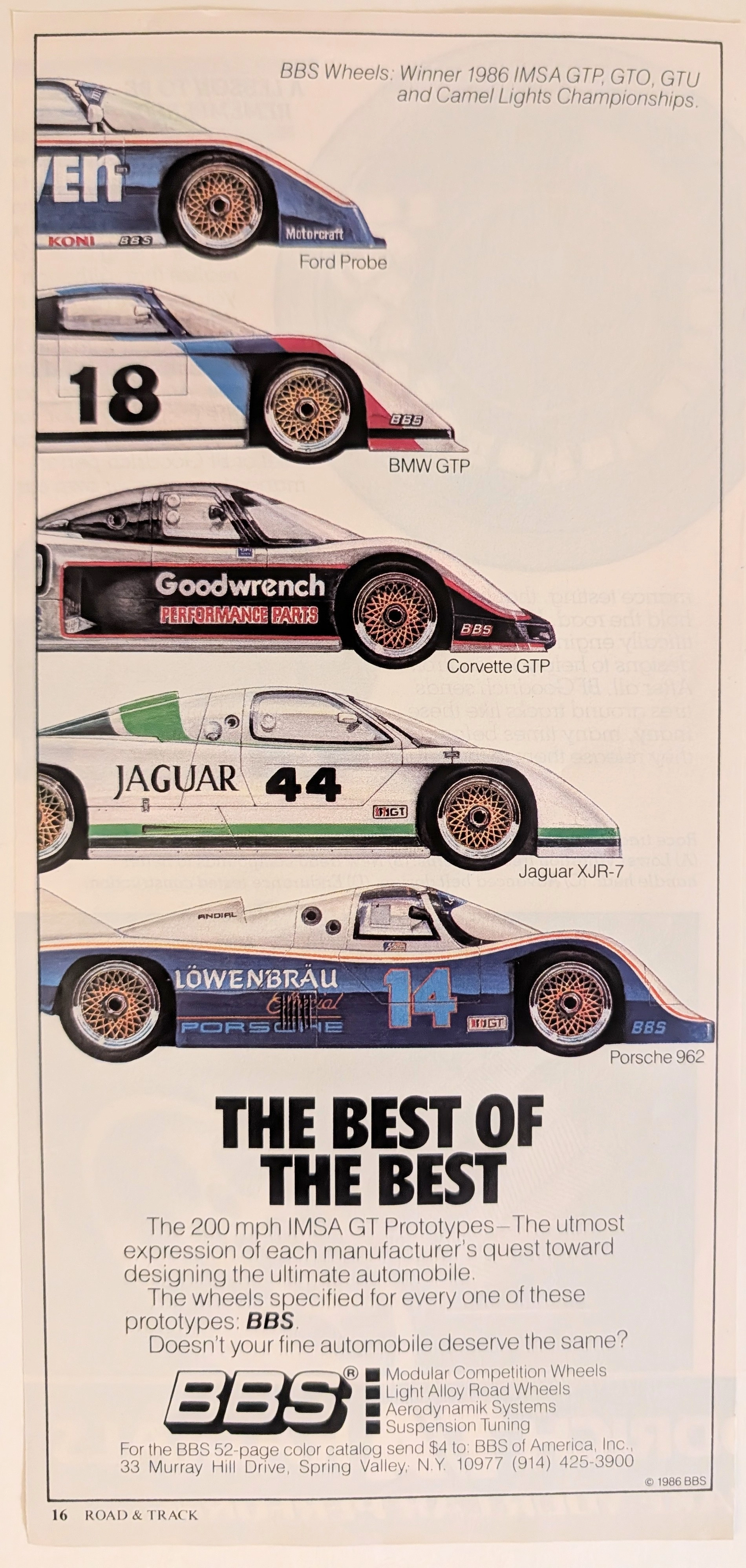
Then, sports car racing was an unrestricted, high-speed arms race. It was an era where manufacturers threw massive budgets at experimental aerodynamics and terrifying turbocharged horsepower, resulting in 200-mph ground-effect monsters that rattled the teeth of spectators. Now, top-tier endurance racing is strictly governed by "Balance of Performance" regulations to ensure parity, and the cars are heavily restricted by standardized hybrid systems. The problem for an automotive enthusiast in 1986 was how to capture a piece of this cutting-edge, million-dollar racing technology for their own street car. The solution, masterfully presented in this advertisement, was BBS. If the fastest, most advanced cars on earth relied on their modular wheels to survive 24 hours of grueling abuse, surely they were good enough for your driveway. This artifact is a portal. It transports us to the paddock of the Daytona International Speedway or Road Atlanta in the mid-1980s. It documents the absolute zenith of the IMSA GTP (Grand Touring Prototype) era, serving as a visual "Who's Who" of legendary race cars, all united by a single, golden component.

AutomotivePatina & Rarity
Read More
The Time Traveller's Dossier: Inver House Scotch 1967 - The Golden Age of Endurance — The Record Institute Journal
111
April 21, 2026

The Time Traveller's Dossier: Inver House Scotch 1967 - The Golden Age of Endurance

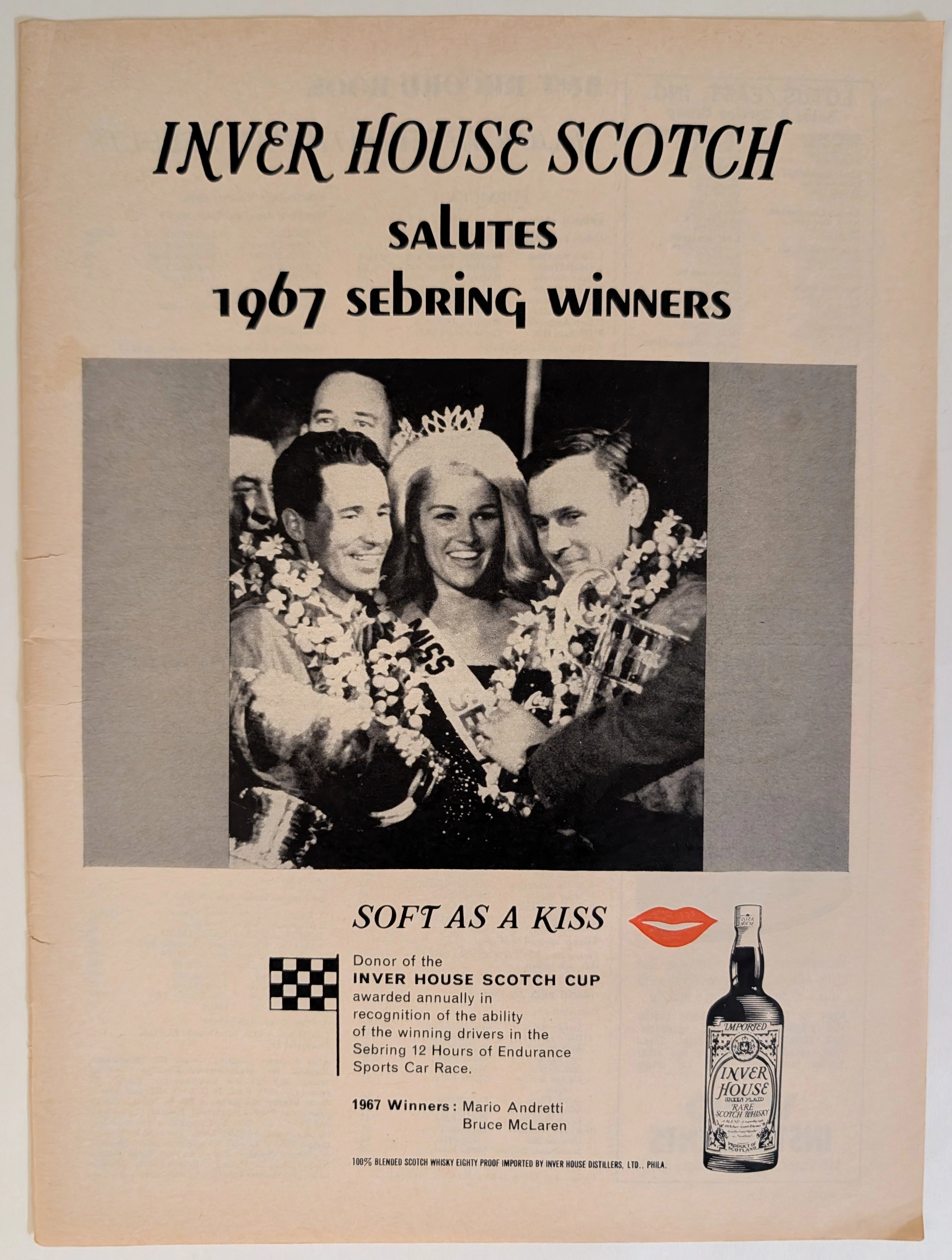
นักเขียนบทความระดับสูงสุด Custom Gem The Time Traveller's Dossier: Inver House Scotch 1967 - The Golden Age of Endurance Summary Then, motor racing was a lethal, deafening, and romantic pursuit. It was an era where the men who piloted experimental, overpowered prototypes for 12 to 24 hours at a time were viewed as a mix of gladiators and jet-set playboys. Now, motorsport is heavily sanitized, and the deep, symbiotic advertising relationships between high-speed danger, hard liquor, and tobacco have been entirely regulated out of existence. The problem for a Scottish whisky brand in the late 1960s was how to inject itself into the glamorous, adrenaline-fueled world of the American sports car boom. The solution was the "Inver House Scotch Cup," a masterful stroke of corporate sponsorship that permanently tied their bottle to the pinnacle of automotive endurance racing: The 12 Hours of Sebring. This artifact is a portal. It transports us to the humid, exhaust-choked winner's circle in Florida, March 1967. It documents a legendary pairing of two motorsport titans—Mario Andretti and Bruce McLaren—and perfectly captures the specific, mid-century masculine pageantry of victory, juxtaposed against a surprisingly delicate corporate slogan.

AutomotivePatina & Rarity
Read More
The Time Traveller's Dossier : Ferrari 312 F1 - The Aerodynamic Subjugation  Summary — The Record Institute Journal
114
April 20, 2026

The Time Traveller's Dossier : Ferrari 312 F1 - The Aerodynamic Subjugation Summary

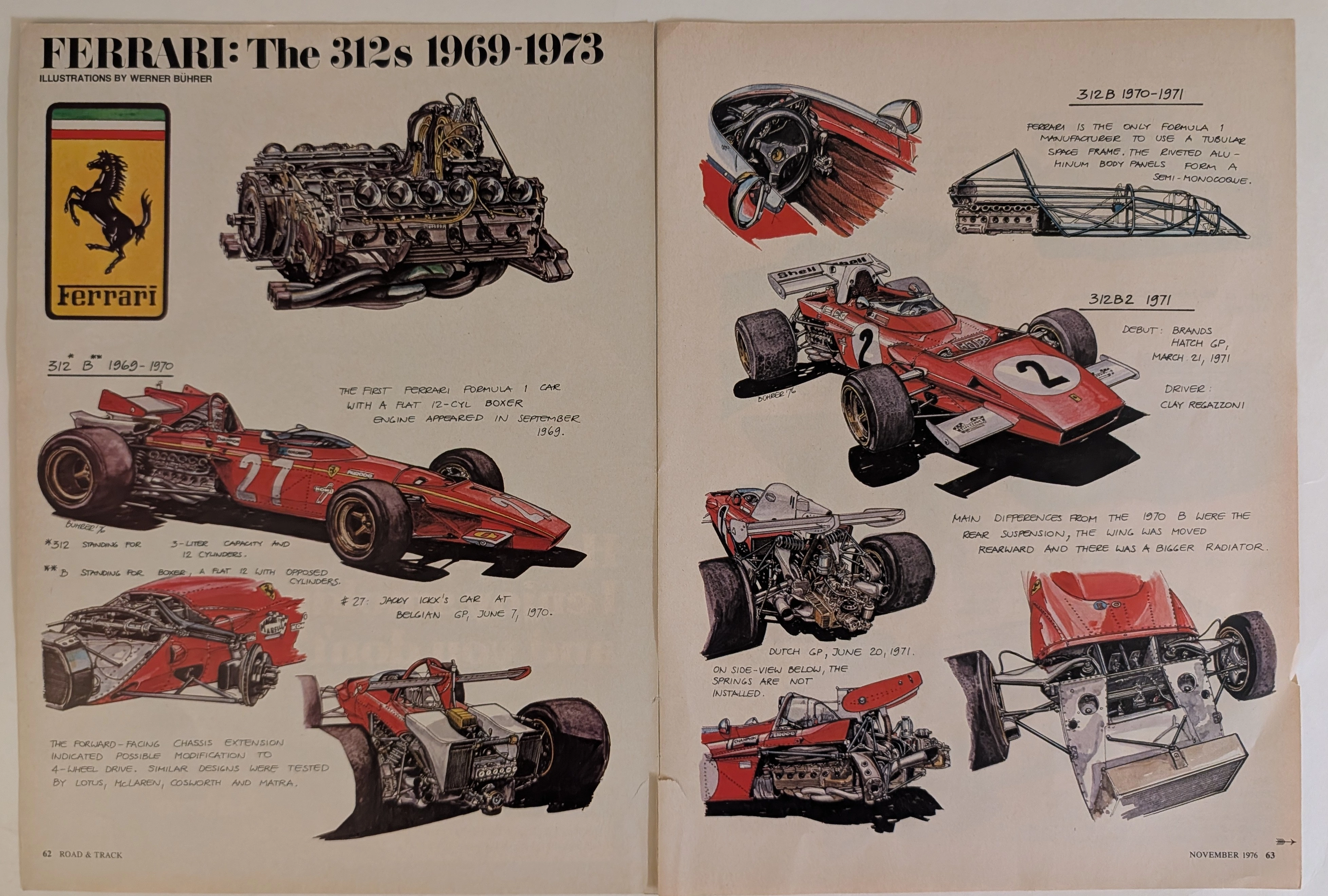
Then, speed was a brute-force equation of pushing a cigar-shaped fuselage blindly through the resisting atmosphere. Now, speed is the absolute subjugation of the invisible air, weaponizing the wind to crush the machine into the asphalt. The problem in the late 1960s and early 1970s Formula 1 was not merely generating more horsepower; the internal combustion engine had already reached terrifying heights of output. The existential crisis for manufacturers was keeping the tires connected to the earth. The cars were literally taking flight. The pursuit of pure, unadulterated mechanical grip had reached its physical, terrifying limit. The solution, as meticulously documented in this 1976 Road & Track retrospective by Werner Bührer, was a violent paradigm shift. It was the painful, reluctant birth of modern aerodynamics. This artifact is a portal. It transports us to the exact historical, psychological, and engineering pivot where Enzo Ferrari—a man who famously proclaimed that aerodynamics were for people who could not build engines—was forced to surrender to the wind. It is an automotive magazine spread, yes. But deeper than that, it is a beautifully illustrated autopsy of a legacy manufacturer desperately evolving its DNA. It captures the frantic mutation of the Ferrari 312 from a traditional tube-framed missile into a winged, deformed, downforce-generating weapon. It is the visual documentation of motorsport losing its romantic innocence and embracing the cold, hard laws of fluid dynamics.

Art & IllustrationAutomotive+1
Read More
The Time Traveller's Dossier : VW Type 3 Automatic - The Compromise of Engineering — The Record Institute Journal
98
April 12, 2026

The Time Traveller's Dossier : VW Type 3 Automatic - The Compromise of Engineering

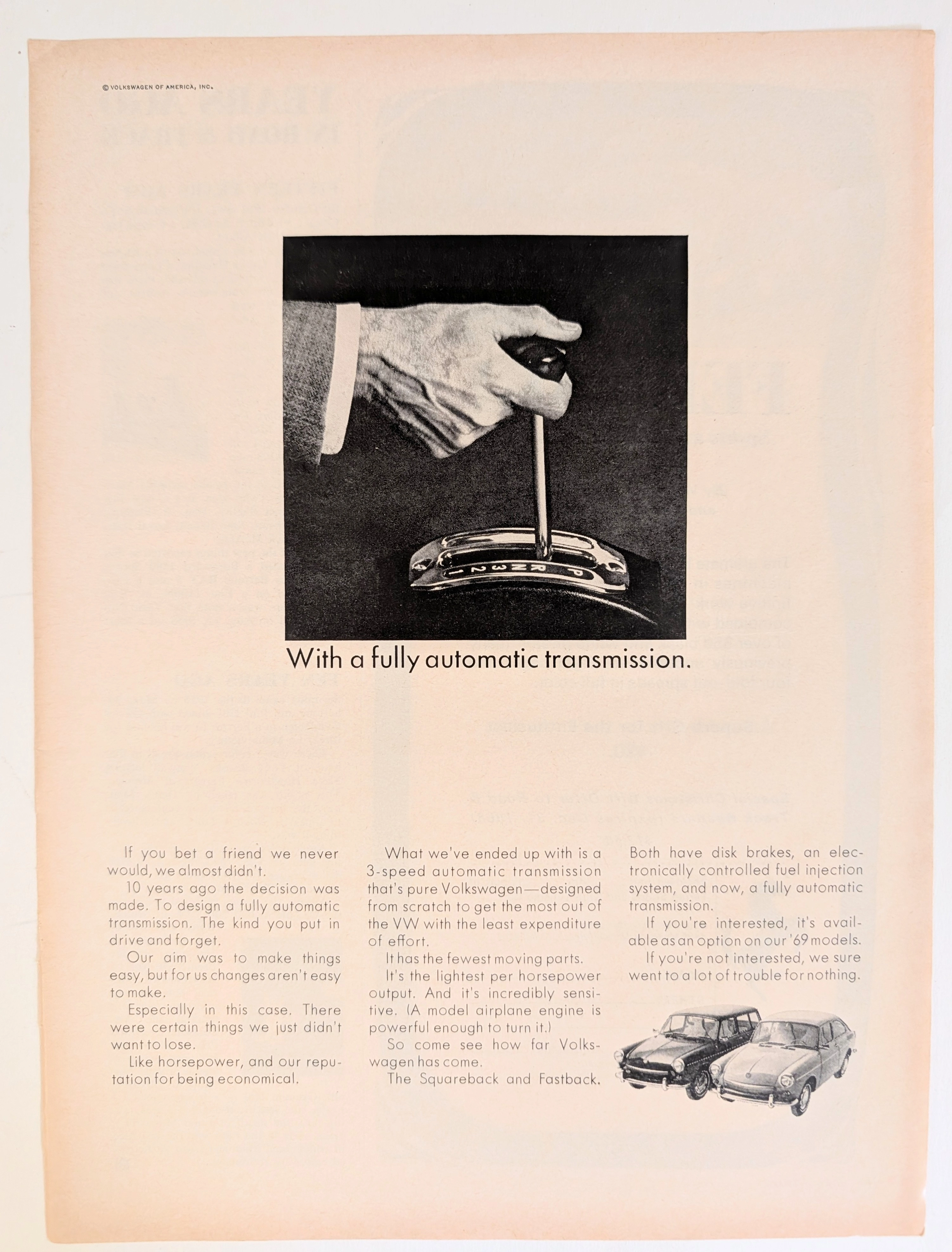
We often remember early Volkswagen history through the lens of simplicity, air-cooled engines, and rugged manual transmissions. But as the American market matured, the demand for comfort began to clash with the brand's original philosophy. This document is historical evidence capturing that moment of compromise. It is not just a car advertisement; it is an engineering confession and a declaration. After a decade of hesitation, Volkswagen of America introduced a fully automatic transmission for the 1969 models. It is a turning point showing that even the most stubborn brand had to adapt to the American consumerism trend that sought ultimate convenience.

Art & IllustrationAutomotive+1
Read More
The Time Traveller's Dossier : Alfa Romeo 8C 2900B Touring Berlinetta - The Apex of Pre-War Velocity — The Record Institute Journal
123
April 12, 2026

The Time Traveller's Dossier : Alfa Romeo 8C 2900B Touring Berlinetta - The Apex of Pre-War Velocity

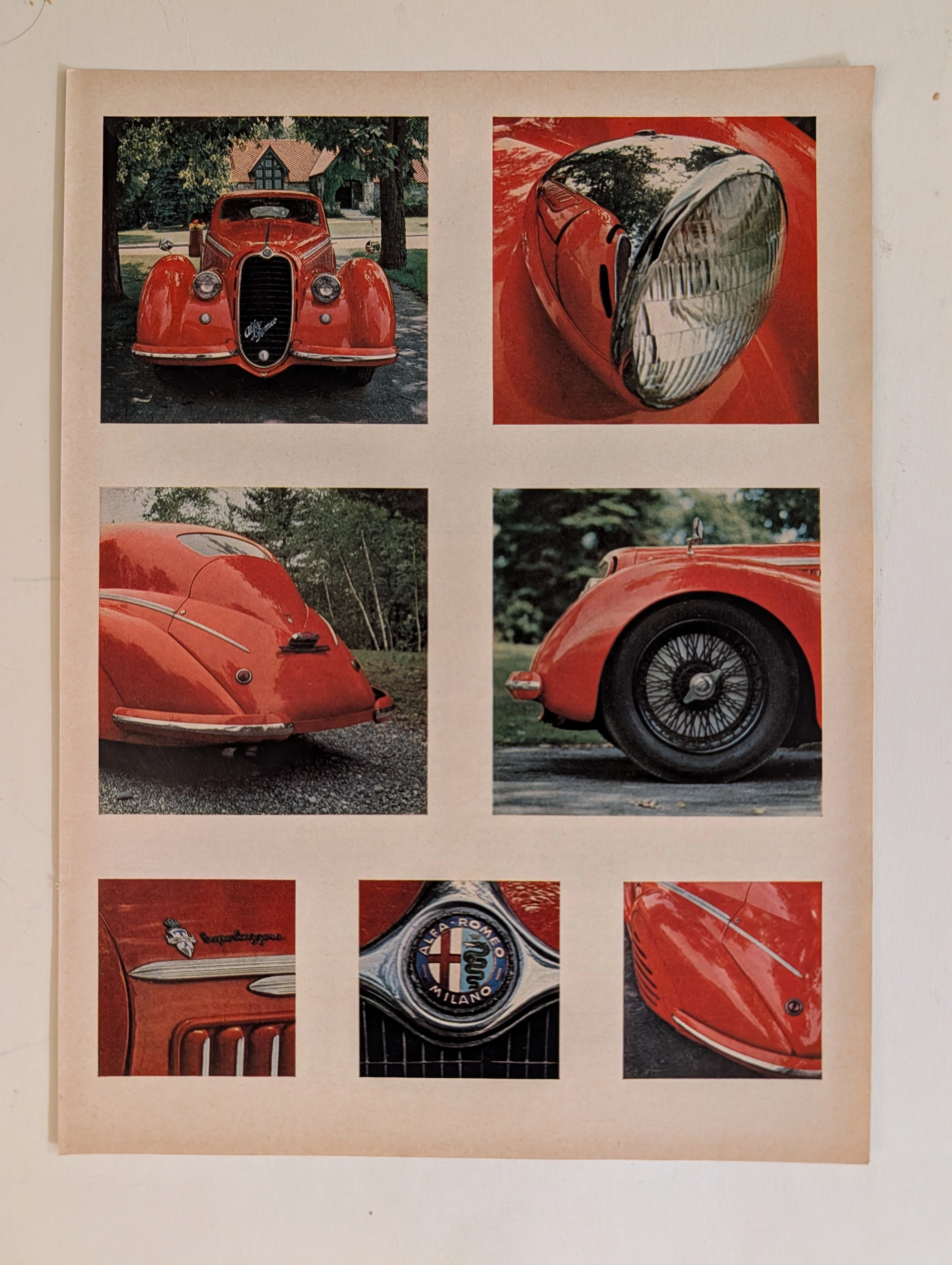
We categorize automotive history into the eras before and after aerodynamics. Prior to the late 1930s, luxury meant upright, carriage-like monuments of steel. Speed was achieved through brute force, pushing flat radiators and exposed fenders through the atmosphere. Then came the marriage of Vittorio Jano's Grand Prix engineering and Carrozzeria Touring's wind-cheating architecture. This artifact is a meticulous dissection of that paradigm shift. It is a photographic autopsy of the Alfa Romeo 8C 2900B Touring Berlinetta. The problem was the physics of atmospheric drag at high speeds. The solution was "Superleggera"—super-light aluminum stretched over thin steel tubes, shaped not by tradition, but by the wind itself.

Photography & FilmPatina & Rarity+1
Read More
The Time Traveller's Dossier : VW Scirocco - The Democratization of Velocity — The Record Institute Journal
133
April 11, 2026

The Time Traveller's Dossier : VW Scirocco - The Democratization of Velocity

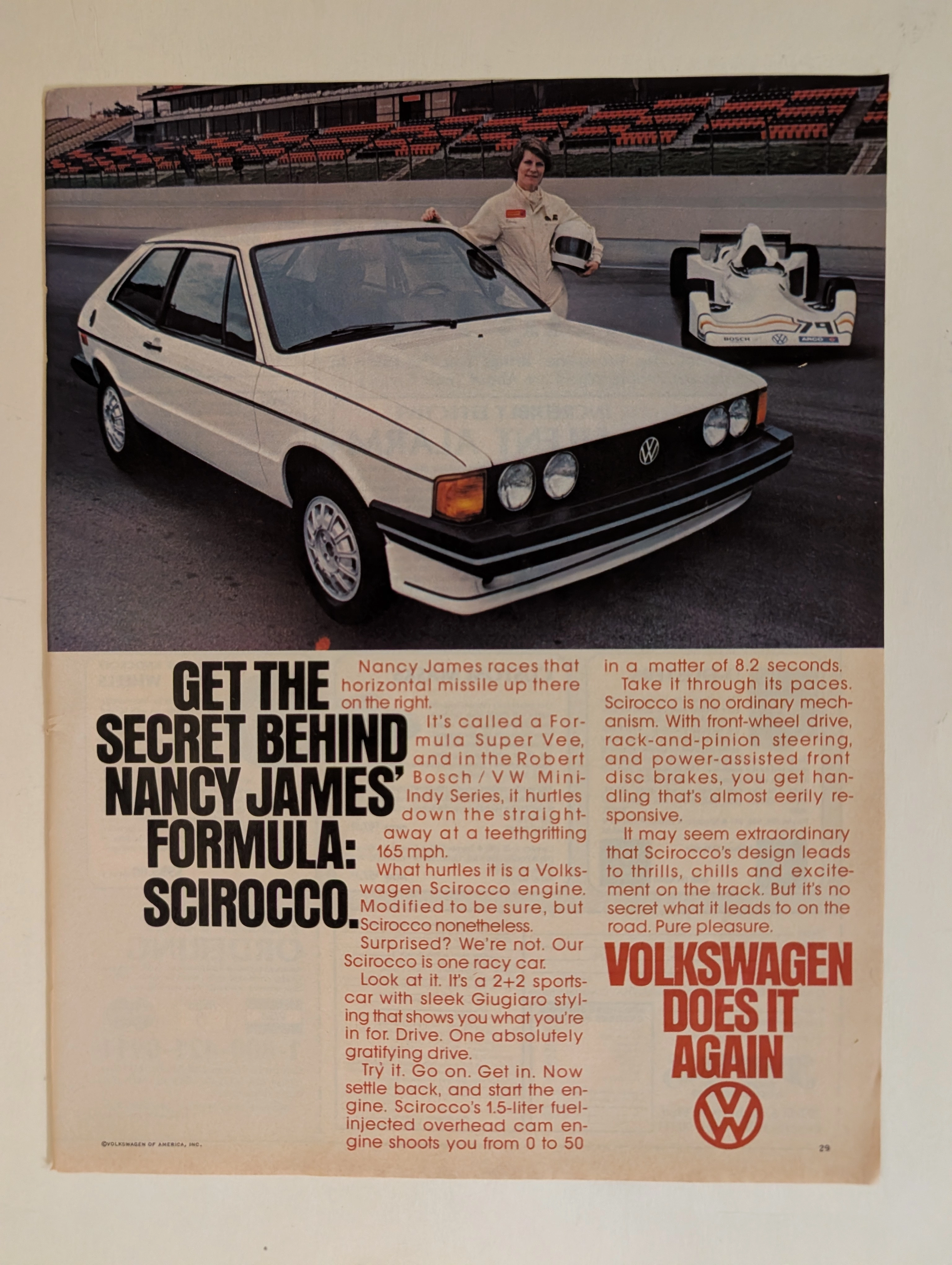
We measure automotive history by the architectures that define it. For decades, the global standard for accessible mobility was curved, air-cooled, and rear-engined. The Volkswagen Beetle was an institution of utilitarian survival. But by the mid-1970s, survival was no longer sufficient. The world demanded forward momentum. The global fuel crisis of 1973 had altered the economic atmosphere. The American muscle car was dying under the weight of its own inefficiency. The Japanese imports were rewriting the rules of reliability. Volkswagen faced an existential precipice. Their solution was a violent pivot in engineering philosophy. This artifact documents that exact, definitive rupture in their timeline. It is not merely a car advertisement. It is a public declaration that the era of the air-cooled curved line was dead. The problem was an aging product line trapped in an obsolete paradigm. The solution was a water-cooled, front-wheel-drive wedge, validated on the racetrack and sold to the public.

Photography & FilmAutomotive+1
Read More
The Time Traveller's Dossier : Willys Jeep - The Engine of Global Conflict — The Record Institute Journal
99
April 11, 2026

The Time Traveller's Dossier : Willys Jeep - The Engine of Global Conflict

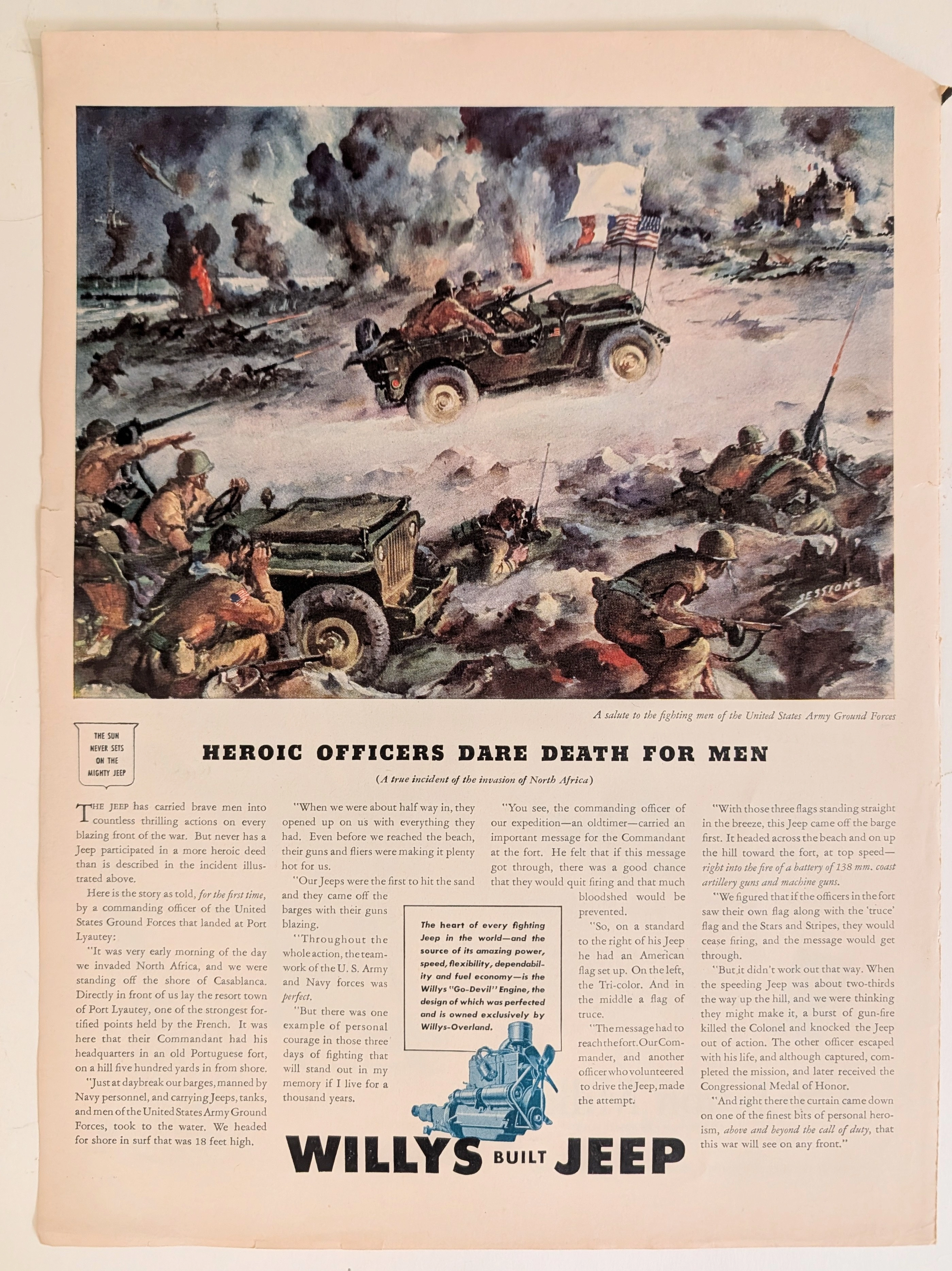
We measure history by the borders we draw. But borders are defined by our capacity to traverse them. Before 1940, mobility was dictated by infrastructure. Armies required roads. Supply lines required railways. The terrain was the ultimate arbiter of military strategy. Then came the quarter-ton utility vehicle. A paradigm shift wrought in steel and canvas. This artifact is not merely an advertisement. It is a documented claim of ownership over a geopolitical pivot point. It is Willys-Overland declaring that their machinery was the vector of liberation. The problem was a world swallowed by tyranny and impassable geography. The solution was a four-cylinder engine wrapped in an olive-drab box.

Art & IllustrationPatina & Rarity+1
Read More
The Time Traveller's Dossier : 1980 Fuzzbuster Elite - The Architecture of Electronic Insurgency — The Record Institute Journal
117
April 8, 2026

The Time Traveller's Dossier : 1980 Fuzzbuster Elite - The Architecture of Electronic Insurgency

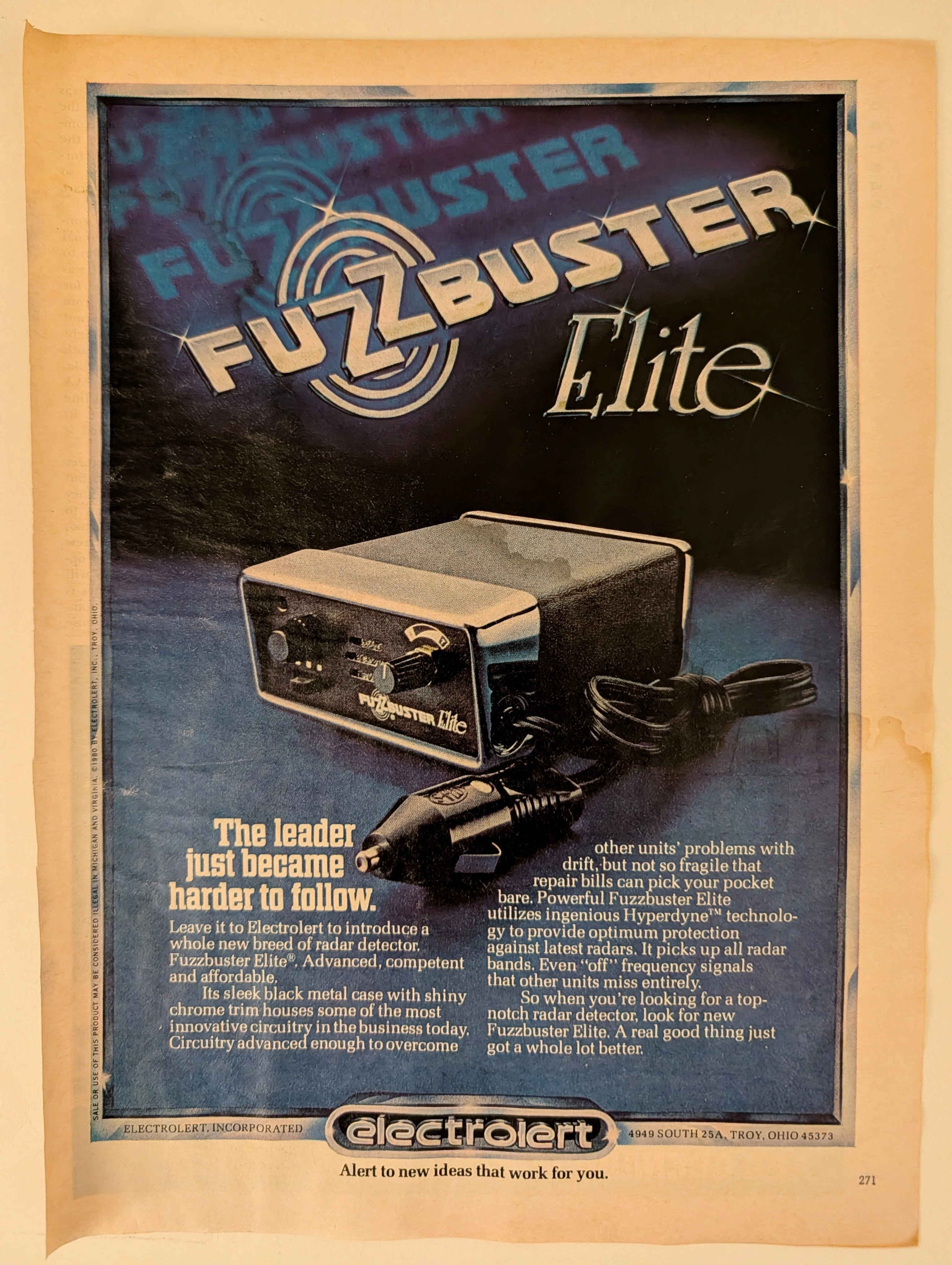
We are observing an artifact of a silent, invisible war. Before this era, the American highway was marketed as a vector of absolute, unbridled freedom. The automobile was the ultimate vessel of personal sovereignty. Here, the paradigm shifts into something darker. The open road has become a zone of constant surveillance. The state has weaponized the electromagnetic spectrum to monitor and penalize the citizen. In response, the citizen weaponized the dashboard. This is the 1980 Fuzzbuster Elite by Electrolert. It is not a car accessory. It is a piece of civilian counter-measures equipment. In an era defined by the deeply unpopular 55 MPH national speed limit and the rise of police microwave radar, this device commodified paranoia. It packaged civil disobedience into a sleek, chrome-trimmed metal box that plugged directly into a cigarette lighter. It represents the exact moment when the act of driving transitioned from a physical experience into an electronic arms race.

Automotive
Read More
The Time Traveller's Dossier : Datsun 280-ZX - The GT Shift — The Record Institute Journal
100
April 8, 2026

The Time Traveller's Dossier : Datsun 280-ZX - The GT Shift

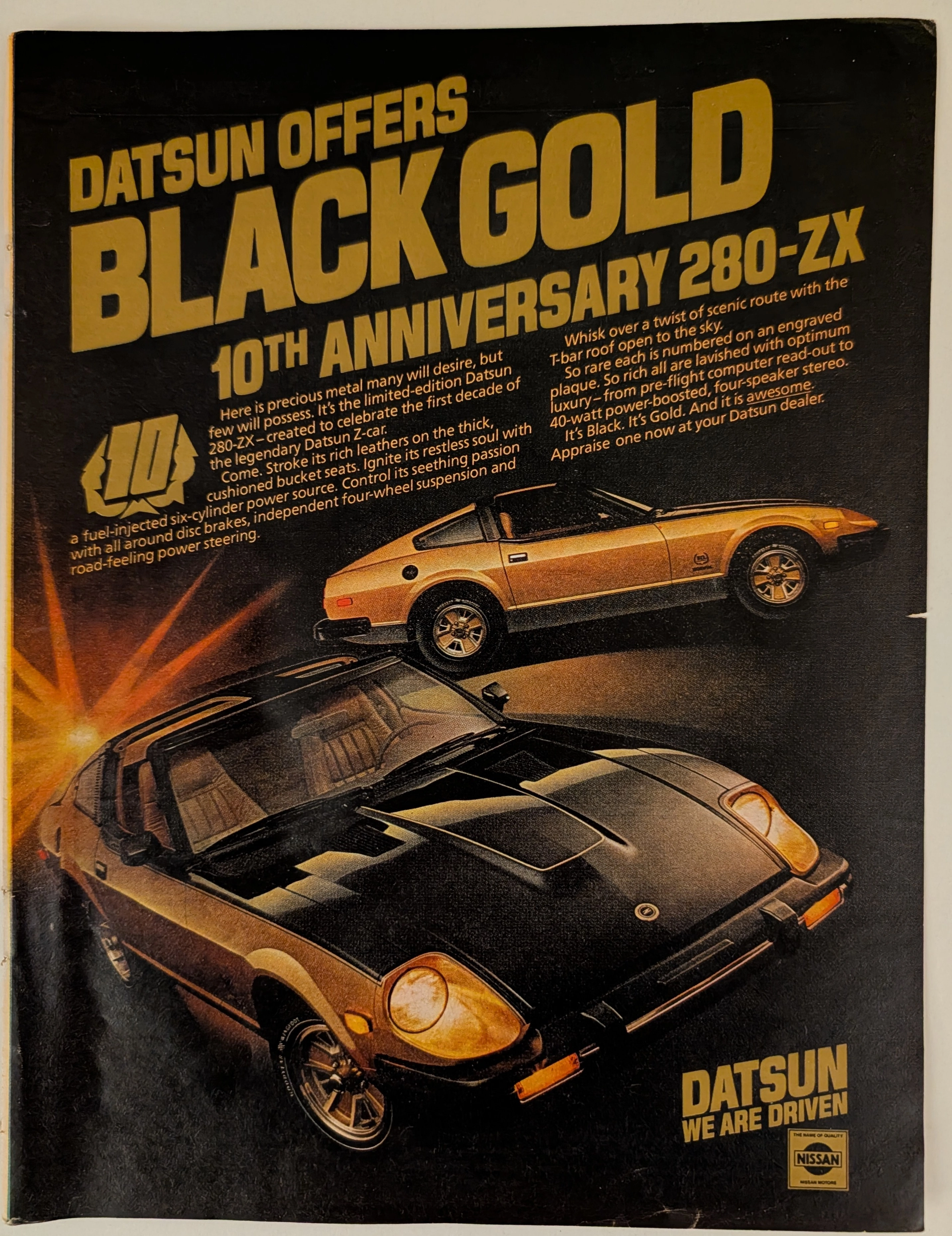
Then. The sports car was a visceral punishment. A machine of raw mechanical feedback. Loud. Uncomfortable. Temperamental. It demanded physical sacrifice in exchange for kinetic velocity. It was a weekend indulgence, entirely divorced from daily comfort. Now. The sports car is an isolated, luxurious capsule. It is a computational network rolling on synthetic rubber. It prioritizes atmospheric control, acoustic perfection, and passenger comfort alongside acceleration. It is a sanctuary of speed. The artifact before us documents the precise architectural bridge between these two eras. The year is 1980. The vehicle is the Datsun 280-ZX 10th Anniversary "Black Gold" edition. This is not merely a piece of automotive marketing collateral. It is the obituary of the raw, analog sports car. It is the birth certificate of the modern Personal Luxury Grand Tourer. It is the definitive moment Japanese manufacturing stopped apologizing and claimed absolute supremacy over the American highway.

Automotive
Read More
The Time Traveller's Dossier : 1964 Studebaker Specialty Lineup - The Desperate Birth of the Niche Vehicle — The Record Institute Journal
129
April 5, 2026

The Time Traveller's Dossier : 1964 Studebaker Specialty Lineup - The Desperate Birth of the Niche Vehicle

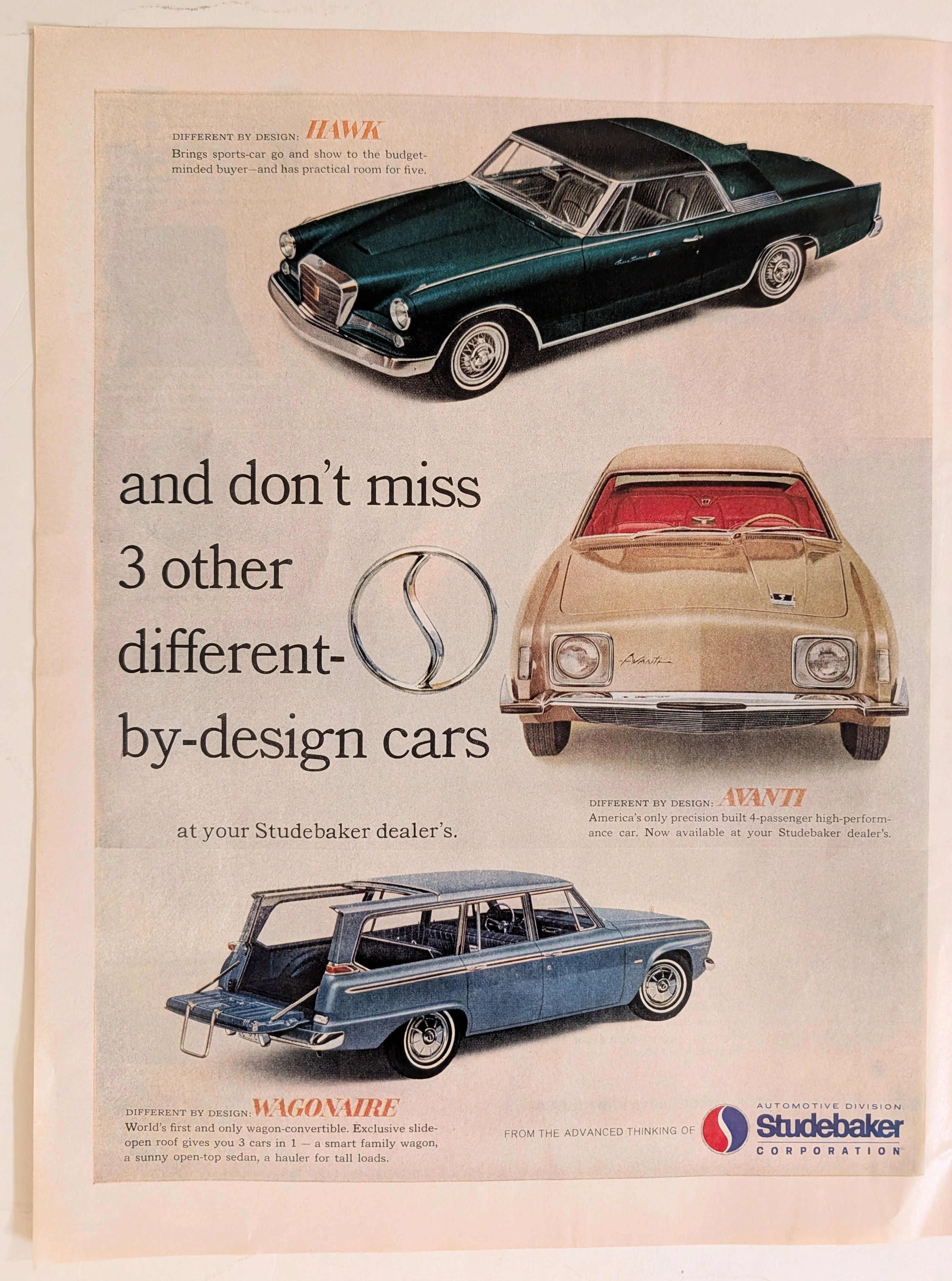
Then, it was a strategy of asymmetrical industrial warfare. A cornered corporation abandoning the center to fight on the fringes. In late 1963, the Studebaker Corporation recognized a fatal truth: they could no longer compete with the monolithic scale of Detroit’s Big Three in the mass market. They could not build a better, cheaper, standard family sedan than Chevrolet or Ford. Therefore, their survival depended on building things that General Motors would never dare to build. This advertisement is the physical manifestation of that strategy. It presents three radically divergent, highly specialized machines. A fiberglass supercar. A budget-conscious European-style grand tourer. A station wagon with a retractable roof. It is a catalog of anomalies. Now, this artifact is a fossil record of an evolutionary dead end in the 1960s, yet it stands as a prophetic blueprint for the modern automotive landscape. The shift here is philosophical and structural. It documents the exact moment a desperate automaker pivoted from the concept of the "universal car" to the "lifestyle vehicle." Studebaker attempted to invent the niche market out of pure financial desperation. They built highly targeted solutions for highly specific consumers, a strategy that would become the absolute standard of the global auto industry half a century later. They were simply forty years too early, and they died for their prescience.

Art & IllustrationAutomotive+1
Read More
The Time Traveller's Dossier : 1964 Studebaker Cruiser - The Euphoric Facade of a Dying Empire — The Record Institute Journal
117
April 5, 2026

The Time Traveller's Dossier : 1964 Studebaker Cruiser - The Euphoric Facade of a Dying Empire

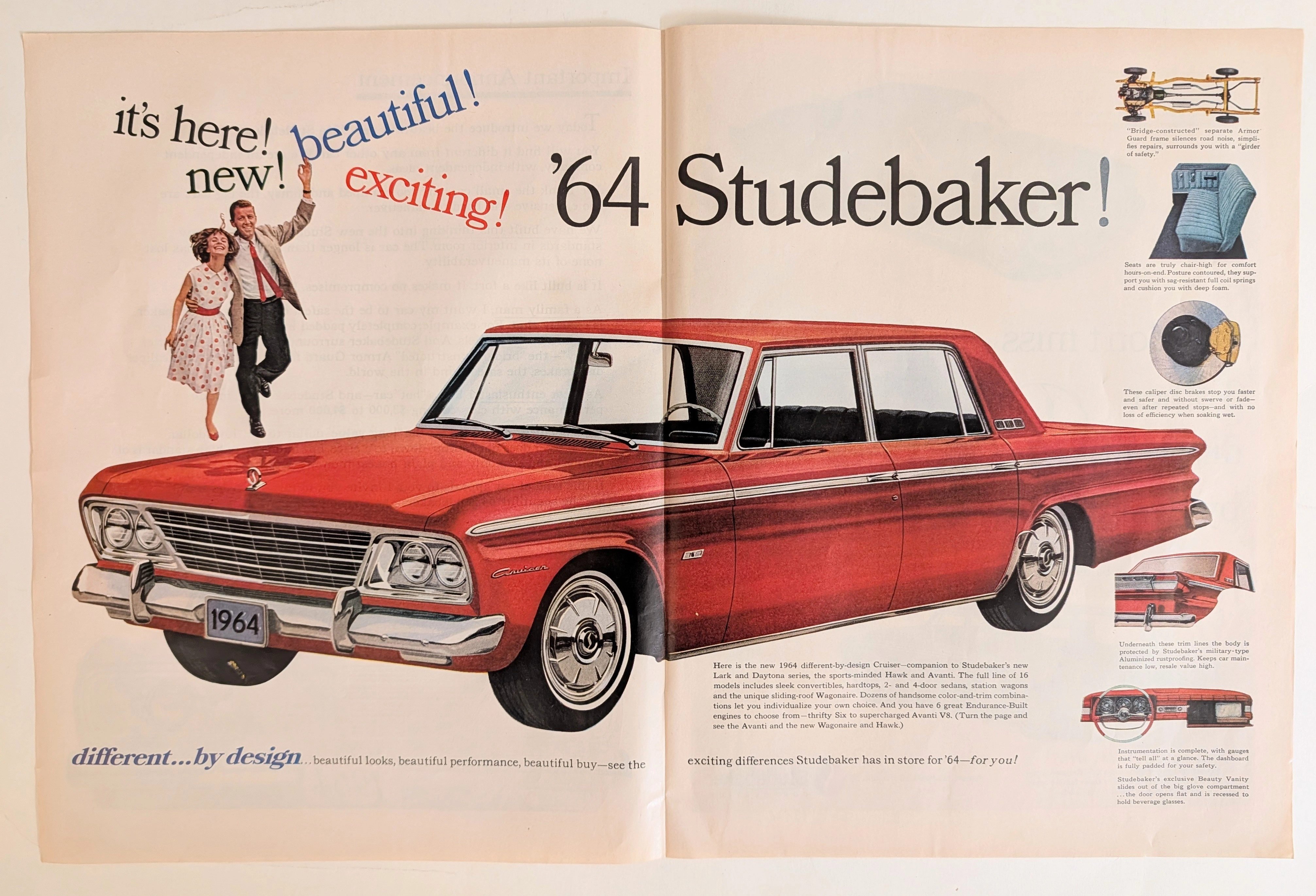
Then, it was a desperate masquerade. A corporate death rattle disguised as a celebration. As this vibrant, two-page centerfold spread graced the glossy pages of American magazines in late 1963, the Studebaker Corporation was quietly bleeding to death. To the casual observer, the advertisement projects an atmosphere of unbridled optimism. A couple leaps into the air with forced, hysterical joy. The typography dances across the page, screaming, "it's here! beautiful! new! exciting!" It is a masterclass in the marketing of artificial momentum. Yet, to the side, anchored in a rigid column of diagrams and technical specifications, lies the stubborn, unyielding truth of a company that still believed superior engineering could save it from financial ruin. Now, this artifact is a profound psychological study of cognitive dissonance in industrial capitalism. It is the physical record of a brand caught in a fatal crossfire: desperately trying to mimic the lifestyle-driven, emotion-heavy advertising of Detroit’s Big Three, while simultaneously clinging to its heritage of hyper-rational, utilitarian engineering. The historical shift here is the final realization that in the modern consumer economy, a superior machine cannot survive if the dream it sells has already expired.

Art & IllustrationAutomotive+1
Read More

1–15 of 44